A primer is not a layer but the intermediate step that removes the mismatch between the substrate and the coating. The wrong primer fails in two ways: on an absorbent substrate it loses the mortar’s water and cannot set, and on a non-porous substrate it finds nothing to grip. The choice depends not on the product but on the substrate beneath it.
The table below shows the most narrowly scoped product for each substrate. The products’ declarations overlap: fair-faced concrete appears both in ZNR P250 and in ZNR P 300, while ZNR P 300 is declared for absorbent substrates such as gypsum, screed and timber as well as for glossy ones. In other words there may be more than one correct option; the table shows the first choice, not the only right one.
The choice depends not on the coating but on the substrate beneath it.
| Substrate | Example | Product | Reason |
|---|---|---|---|
| Absorbent substrate | Gypsum, plasterboard, aerated concrete, plaster, lime-based plaster, chipboard, screed | ZNR P 200
201
0.100–0.175 kg/m²
(Varies depending on surface conditions) |
An absorbent substrate pulls the water out of the mortar quickly; the mortar cannot set and it cracks. The primer evens out the absorbency. Before cement-based applications, leveling screed and tile fixing. |
| Fair-faced concrete wall and ceiling | Concrete surface straight from the formwork, before ceiling plaster | ZNR P250
202
0.200–0.350 kg/m²
(Varies depending on surface conditions) |
Fair-faced concrete is smooth and has low absorbency; gypsum and cement-based plasters cannot grip it directly. It establishes adhesion in horizontal and vertical interior applications. |
| Glazed and glossy surface | Ceramic, marble, clinker, sandstone, plywood, fair-faced concrete | ZNR P 300
203
0.150–0.250 kg/m²
(Varies depending on surface conditions) |
On a non-porous surface there is no mechanical keying; adhesion is entirely chemical. A mineral-filled primer gives the surface a texture to grip. In the data this product is also declared for absorbent substrates such as gypsum, screed and timber — so it is the most broadly scoped primer. |
| Admixture into the mortar | Plaster, repair, coating, masonry and tile mortars; beneath screed | LATEKS
200
Varies depending on surface conditions |
This product is not only a primer but a mortar admixture. Added into the mortar it increases adhesion and water tightness; it is also brushed under screed as a primer. |
Consumption is read from the product record. The reason on each row was compiled from that product’s own declared use.
4 products. The other items in the system (insulation board, dowel, drainage board, mechanical work) are not ZNR products and are not in the catalogue.
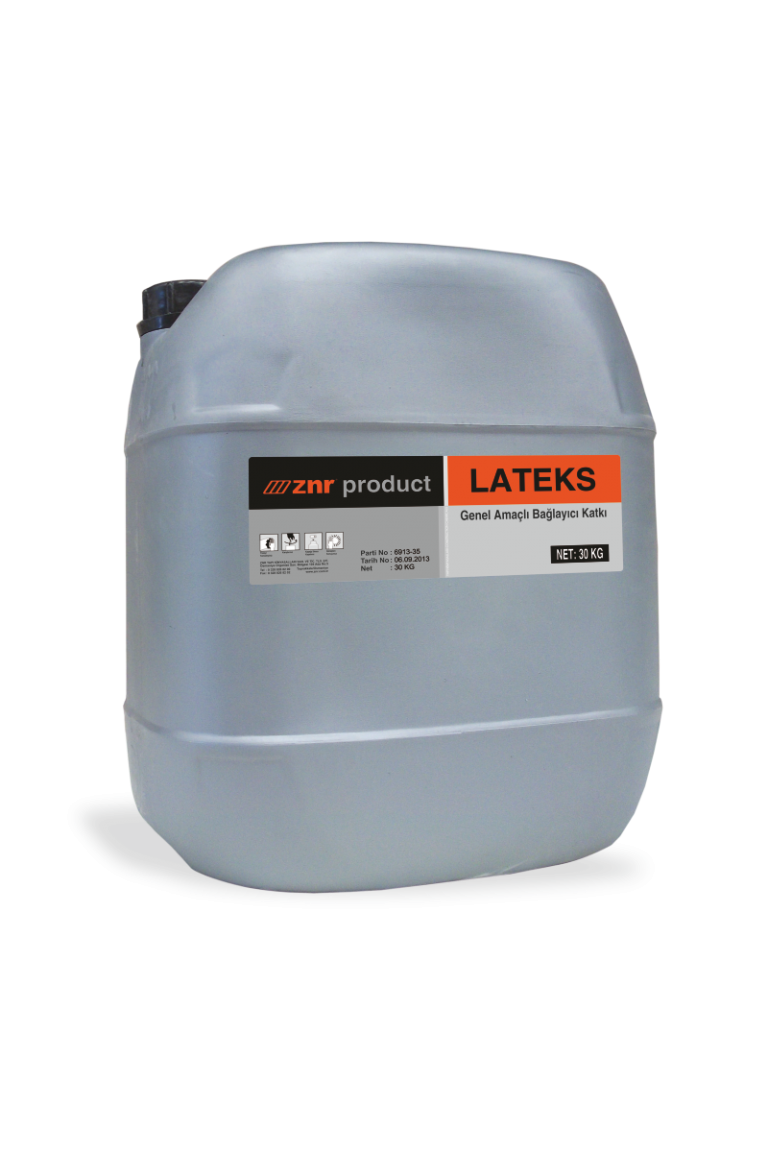
Adhesion Enhancing Primer / Mortar Additive
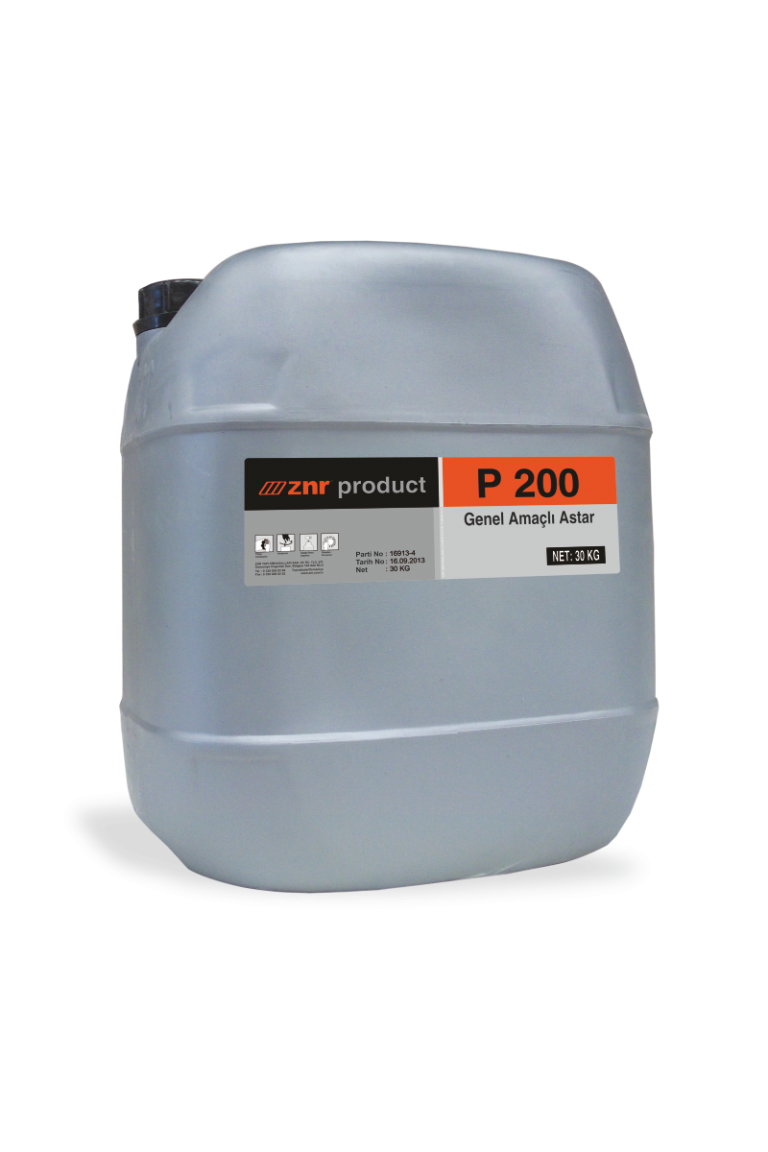
General-Purpose Acrylic Primer
Concrete Primer
Glazed Surface Primer
On an absorbent surface the mortar loses its water, cannot set and adhesion drops. On a non-porous surface the coating does not grip at all. In both cases the failure appears weeks after application, as the coating lifts.
It should not be. Each primer is declared for different surfaces: ZNR P 200 for absorbent surfaces, ZNR P250 for fair-faced concrete, and ZNR P 300 for both non-porous and absorbent surfaces. A primer developed for an absorbent surface has no texture to grip on glossy tile. The choice depends not on the product but on the substrate beneath it.
Both. Added to the mixing water of the mortar it increases adhesion and water tightness; brushed directly under screed it acts as a primer. In the data its consumption reads “varies with surface condition” — no numeric coefficient has been entered.
This value has not been entered in the product record. Before application, check the technical data sheet of the product concerned; the link to the data sheet is on the product page.
Details such as the parapet return, the drain mouth and the expansion joint decide the fate of the system. Our technical team looks at it in place.