Spalling concrete is not a surface problem; it is usually the result of reinforcement corrosion. Rusting steel grows in volume and pushes off the cover; the visible crack is the last stage of a process that started inside long before.
4 layers, in application order.
| Layer | Product | Role | Consumption and packaging | |
|---|---|---|---|---|
| 01 | Removing damaged concrete |
Mekanik işlem
not a ZNR product
|
Spalled and loose concrete is removed down to sound substrate. The edges are cut square. |
—
—
|
| 02 | Bonding primer |
ZNR REPAIR AC
306
|
Establishes the bond between the old concrete and the new mortar. Applied wet on wet. Mandatory. |
1.55 kg/m² for 1 mm thickness
(Varies depending on surface conditions)
25 kg kraft bag
|
| 03 | Fine repair mortar |
ZNR REPAIR C5
303
|
≥ 40 N/mm² at 28 days. For surface spalling and level differences. Mandatory. |
2.00 kg/m² for 1 mm thickness
25 kg kraft bag
|
| 04 | Curing |
ZNR CURE 100
600
|
Prevents early water loss. The cheapest insurance against shrinkage cracking. |
0.100–0.300 kg/m² in a single coat
(Varies depending on surface conditions)
30 kg plastic drum
|
Consumption and packaging are read from the product record and are not written separately on this page — when the product is updated, this is updated too.
6 products. The other items in the system (insulation board, dowel, drainage board, mechanical work) are not ZNR products and are not in the catalogue.
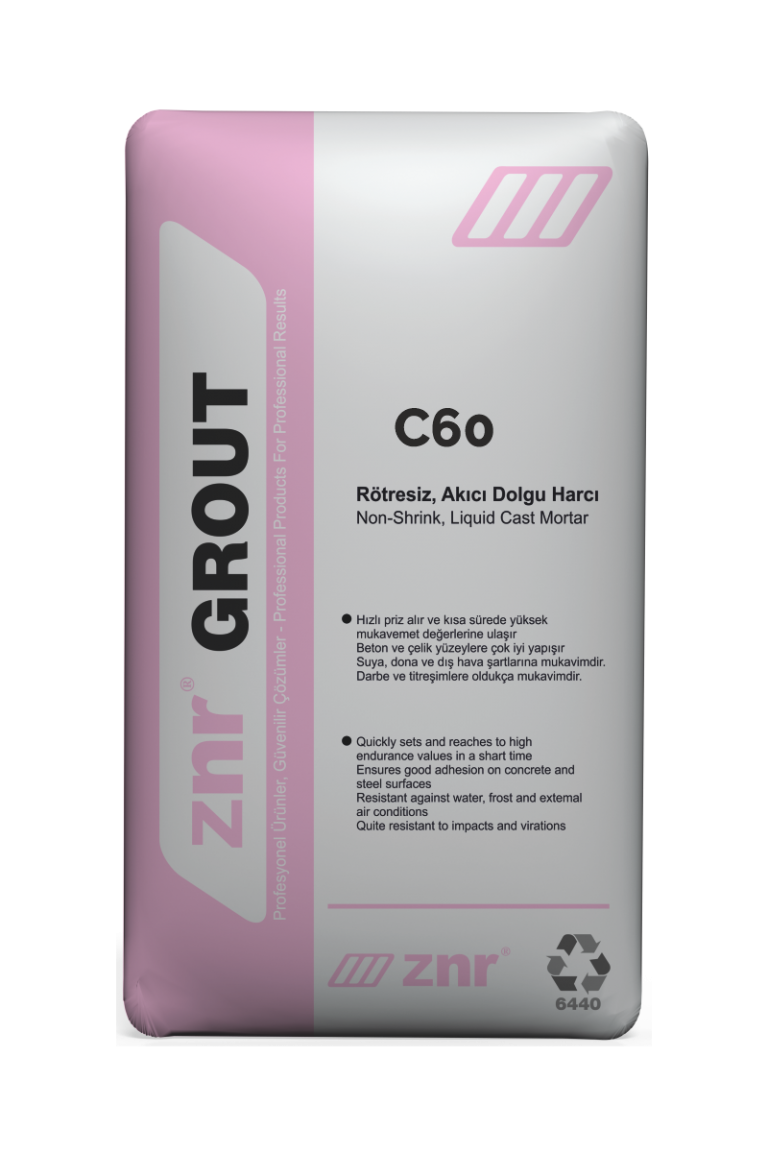
Shrinkage-Free Flowable Grout
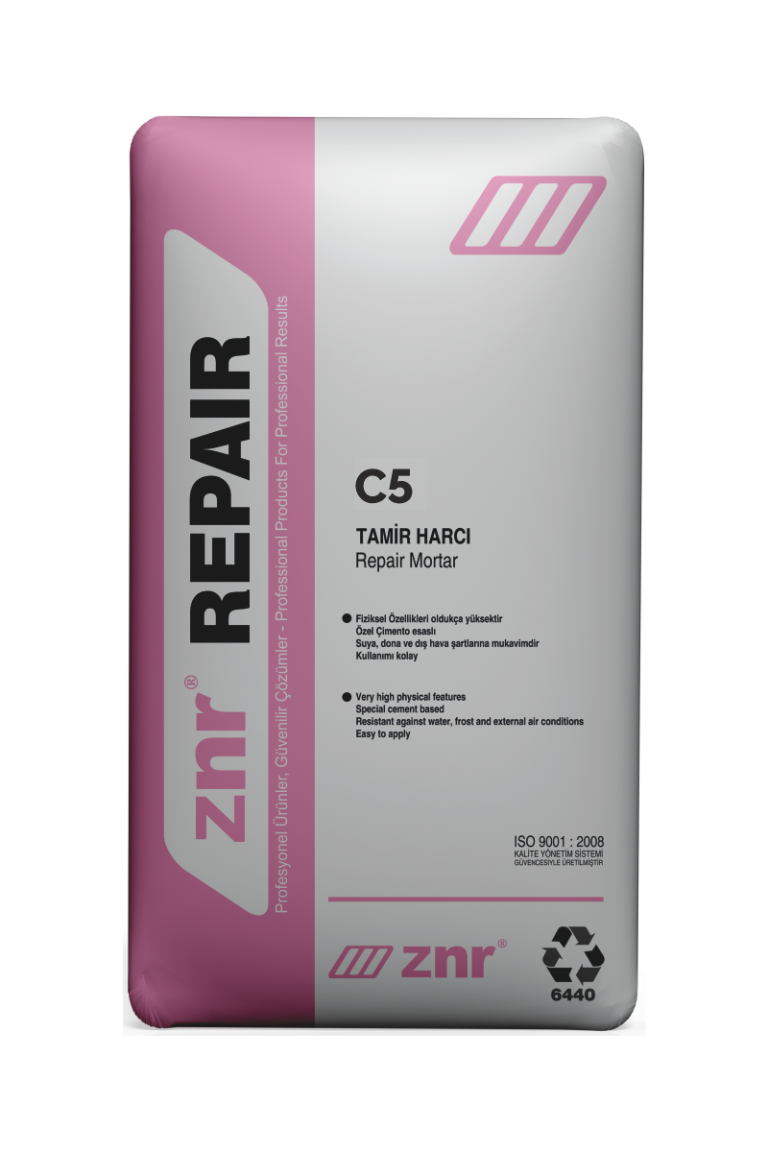
Shrinkage-Free Cement-Based Structural Fine Repair Mortar
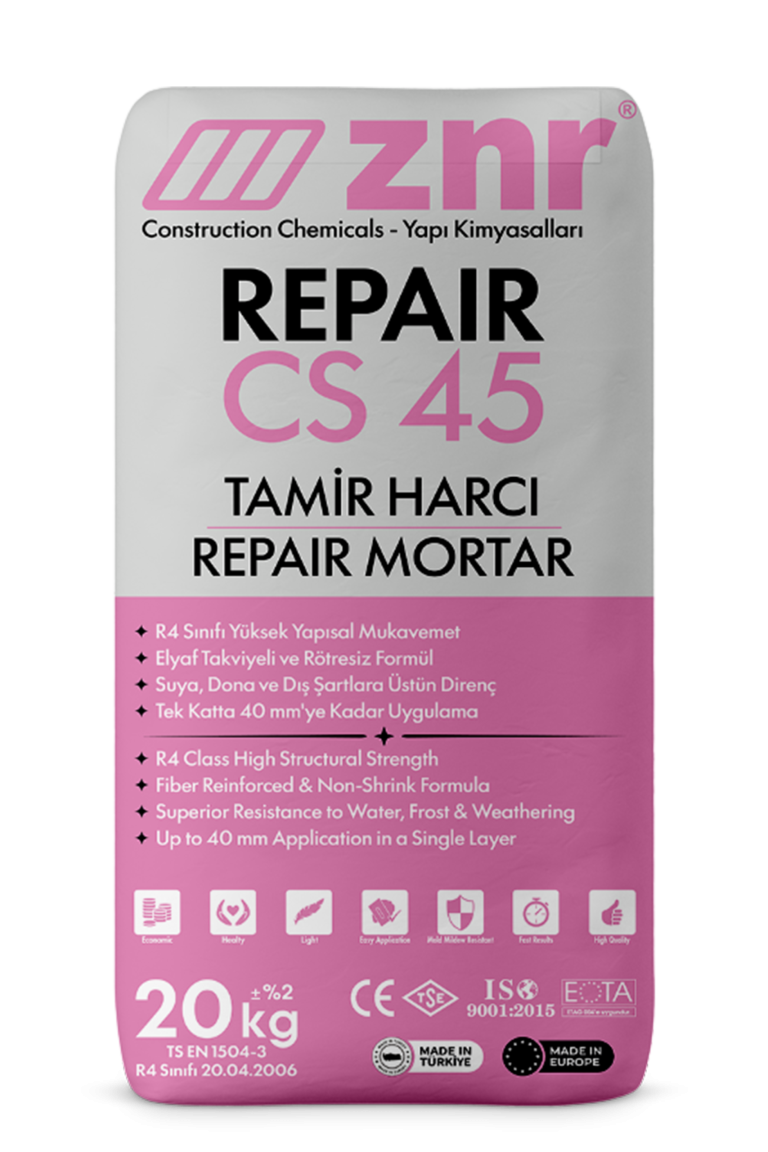
Shrinkage-Free Cement-Based Structural Thick Repair Mortar
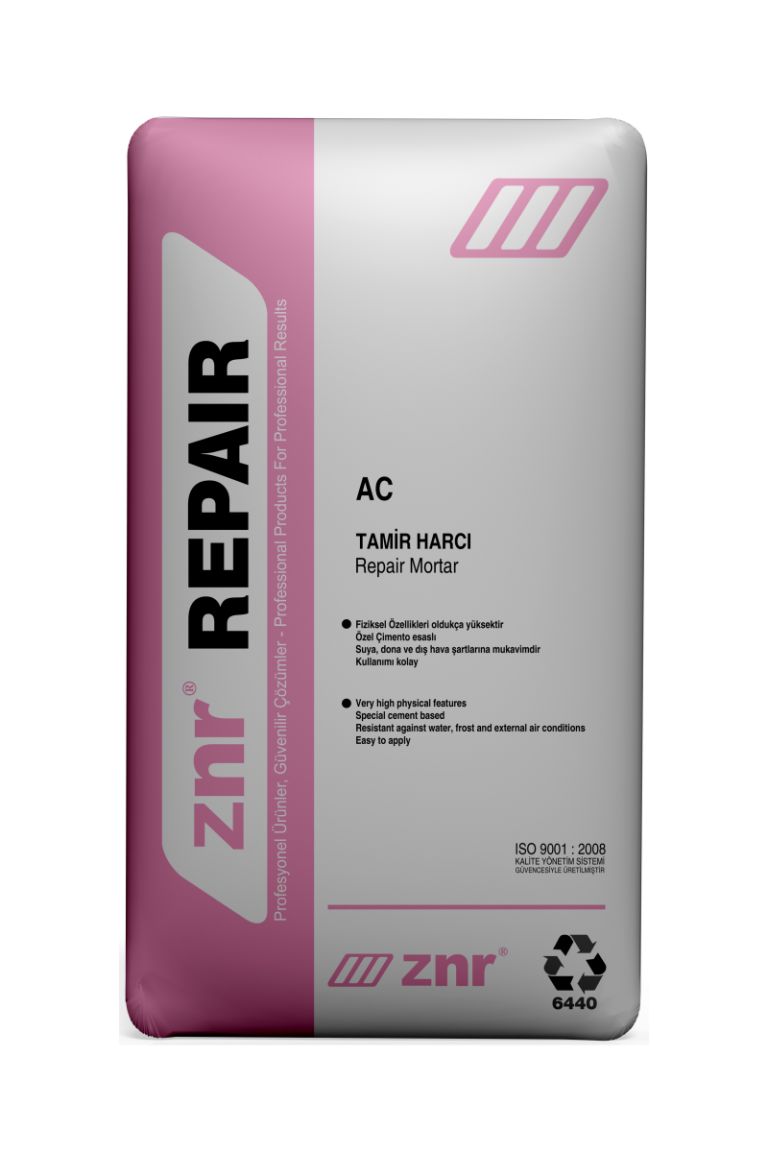
Cement-Based Structural Adhesion Enhancing Primer
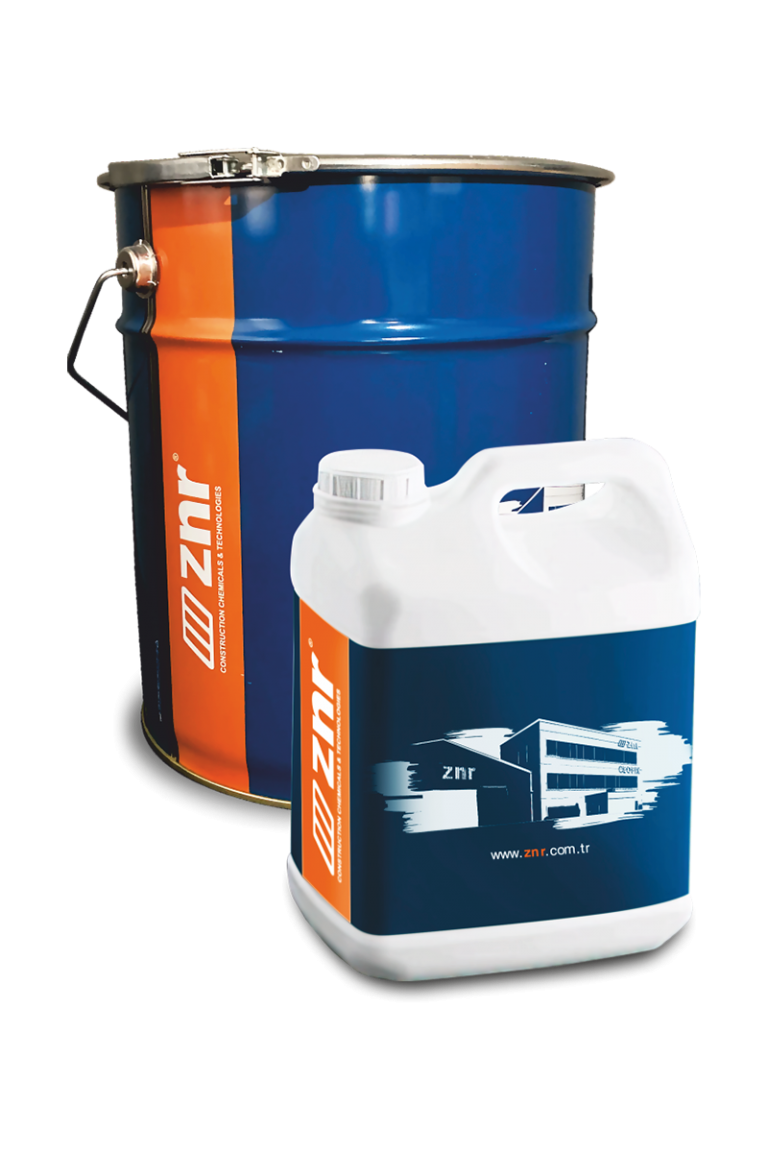
Zinc-Rich Epoxy Primer
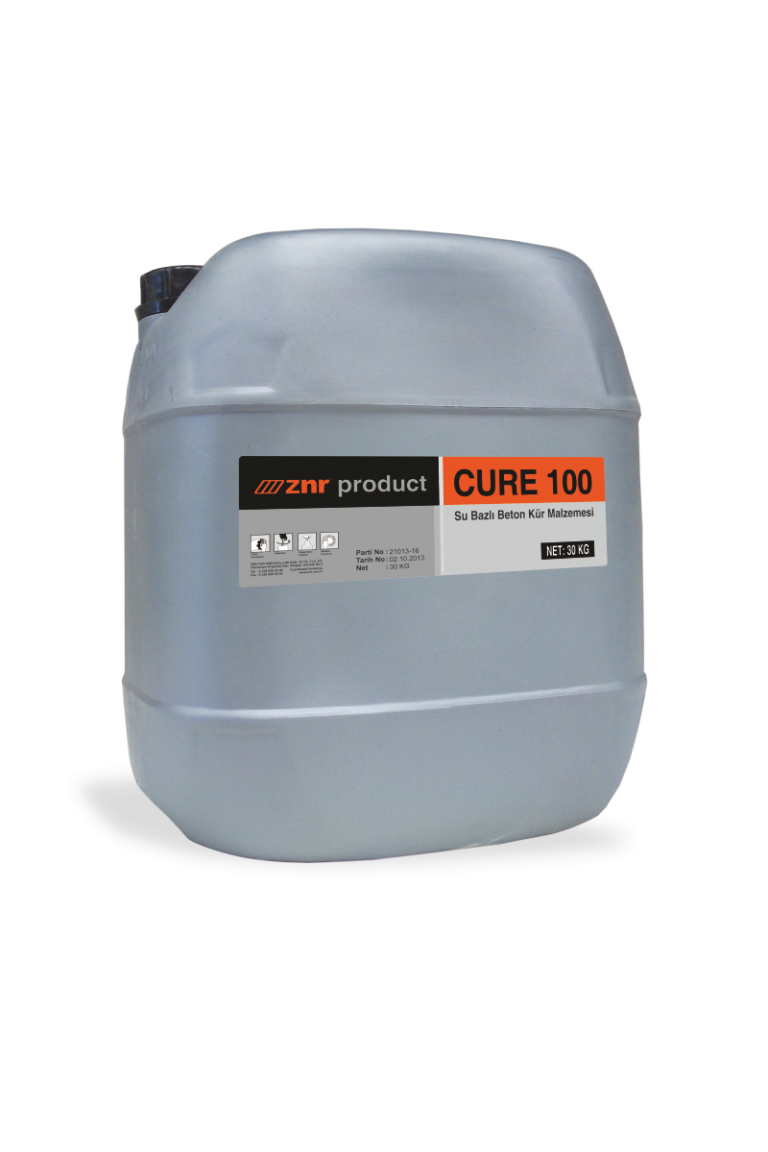
Concrete Curing Compound
It cannot. If a layer of rust remains, corrosion continues under the mortar and within a few years pushes off the new mortar as well. The reinforcement is cleaned to bright metal and the back of the bar is exposed too.
It should not be. A thin edge taken down to zero cannot grip and lifts. The edge is cut square to a depth of at least 5 mm; the mortar bears against that step.
The mortar loses its water early, shrinkage cracks form and the declared strength is not reached. Next to the cost of the material, curing is almost free insurance.
It can be the opposite. Thick filling mortars are usually lightweight and lower in strength; in structural repair you look at the class, not at the name. R4 is required on a load-bearing element.
Details such as the parapet return, the drain mouth and the expansion joint decide the fate of the system. Our technical team looks at it in place.