
01 — Use
Where it is used
01
Used on all types of concrete or steel surfaces located underground (pipeline systems, fuel tanks, manholes, protective concrete layers under fuel tanks, foundation piles, etc.); on surfaces of concrete or steel structures exposed to water and wave impact zones (pier piles and spillways, dam and regulator gates, pontoons and barges, underwater sections of marine vessels, bilge and ballast tanks). Also used in ports and shipyards, and for the internal surfaces of reinforced concrete or steel pipes carrying chemical wastewater or seawater, penstocks, and treatment plants.
02 — Technical data
Measured values
Source: the product’s technical data sheet. Veri notu: ambalaj celiskisi: site 20 / TDS 17.4.
| Property | Value | Standard |
|---|---|---|
| Binder | Epoxy + Bitumen | |
| Form | Liquid | |
| Color | Black | |
| Density | 1.35 kg/dm³ | |
| Solids content | %73 | |
| Pot life | 480 min | |
| Touch dry | 6 hours | |
| Open to traffic | 24 hours |
03 — Calculation
Consumption calculator
1.40 kg/m² for 1 mm thickness (Varies depending on surface conditions) · Thickness-based
area × thickness × 1.40
Total material
—
kg
Packaging
—
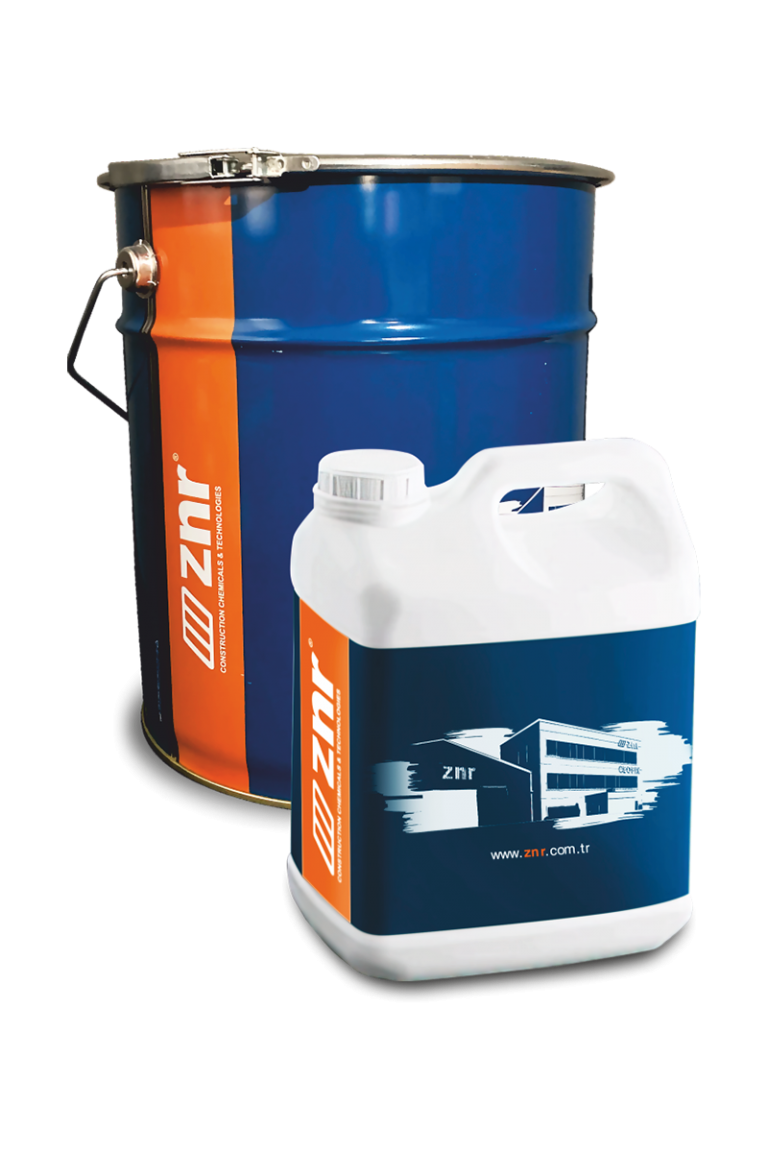
20 kg set
The values are theoretical; they change with surface roughness, absorbency and application method. Wastage must be calculated separately.
04 — Systems
Systems this product is part of
This product does not yet appear in any system write-up.
Waterproofing area Foundations and retaining walls, terraces, wet areas, pools, active leaks →