What finishes a terrace is not the rain but the water staying there. On a terrace with a bad fall, water ponds, lifts the coating through freeze-thaw cycles and finds its way in through the smallest discontinuity. The problem usually does not start in the middle of the surface; it starts at the foot of the parapet, around the drain and at the expansion joint.
5 layers, in application order.
| Layer | Product | Role | Consumption and packaging | |
|---|---|---|---|---|
| 01 | Falls and surface repair |
ZNR REPAIR C5
303
|
Ponding areas, cracks and cove returns. The fall must be at least 2%. |
2.00 kg/m² for 1 mm thickness
25 kg kraft bag
|
| 02 | Primer |
ZNR P 200
201
|
Evens out absorbency and stops the waterproofing mortar losing its water. Mandatory. |
0.100–0.175 kg/m²
(Varies depending on surface conditions)
5 kg and 30 kg plastic jerry cans
|
| 03 | Waterproofing |
ZNR WP 2K SE
103
|
Cement-based fully flexible, 2 coats crosswise, 2 mm in total. Stays beneath the tile. Mandatory. |
1.70 kg/m² for 1 mm thickness
(Varies depending on surface conditions)
30 kg Set (A: Liquid 10 kg – B: Powder 20 kg)
|
| 04 | Tile adhesive |
ZNR TILEBOND 5000 ULTRAFLEX
704
|
Class C2TES2 flexible adhesive. Withstands thermal movement. Mandatory.
⚠ a site–TDS difference for class is awaiting a decision |
3.0–7.0 kg/m²
(Varies depending on substrate condition)
C2TES2 Class Adhesive Mortar
25 kg kraft bag
|
| 05 | Grout |
ZNR FUGA FLEX 1200
712
|
Flexible grout. Expansion joints are filled separately with an elastic sealant. |
Varies depending on substrate and joint width
5 kg and 20 kg bags
|
Consumption and packaging are read from the product record and are not written separately on this page — when the product is updated, this is updated too.
8 products. The other items in the system (insulation board, dowel, drainage board, mechanical work) are not ZNR products and are not in the catalogue.
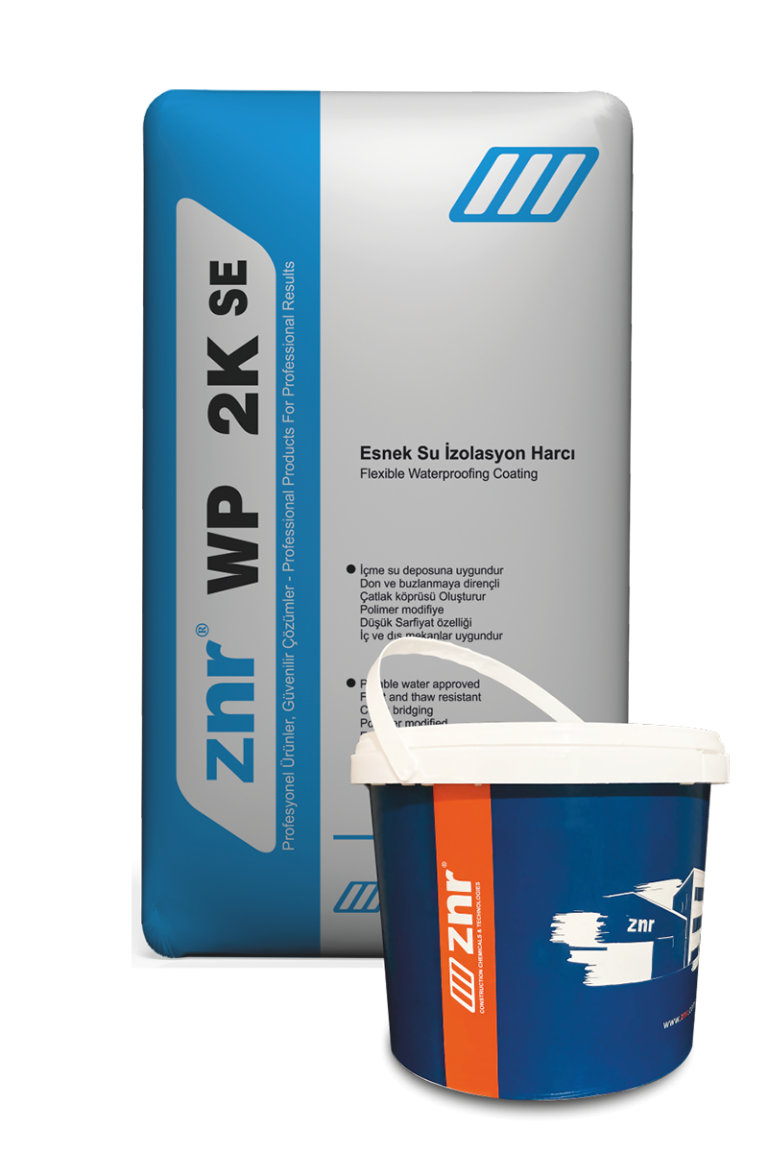
Cement-Based Fully Flexible Waterproofing Material
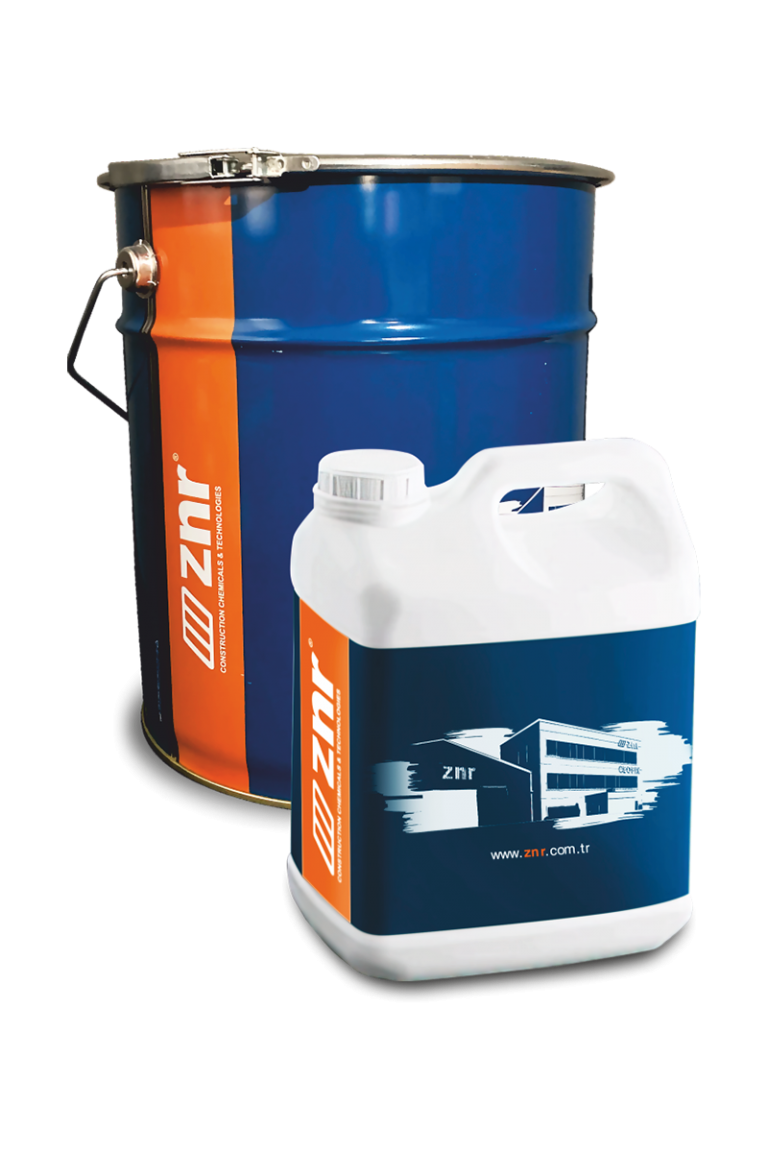
Solvent-Based Polyurethane Primer / Waterproofing Material
Solvent-Free Polyurethane-Based Waterproofing Material
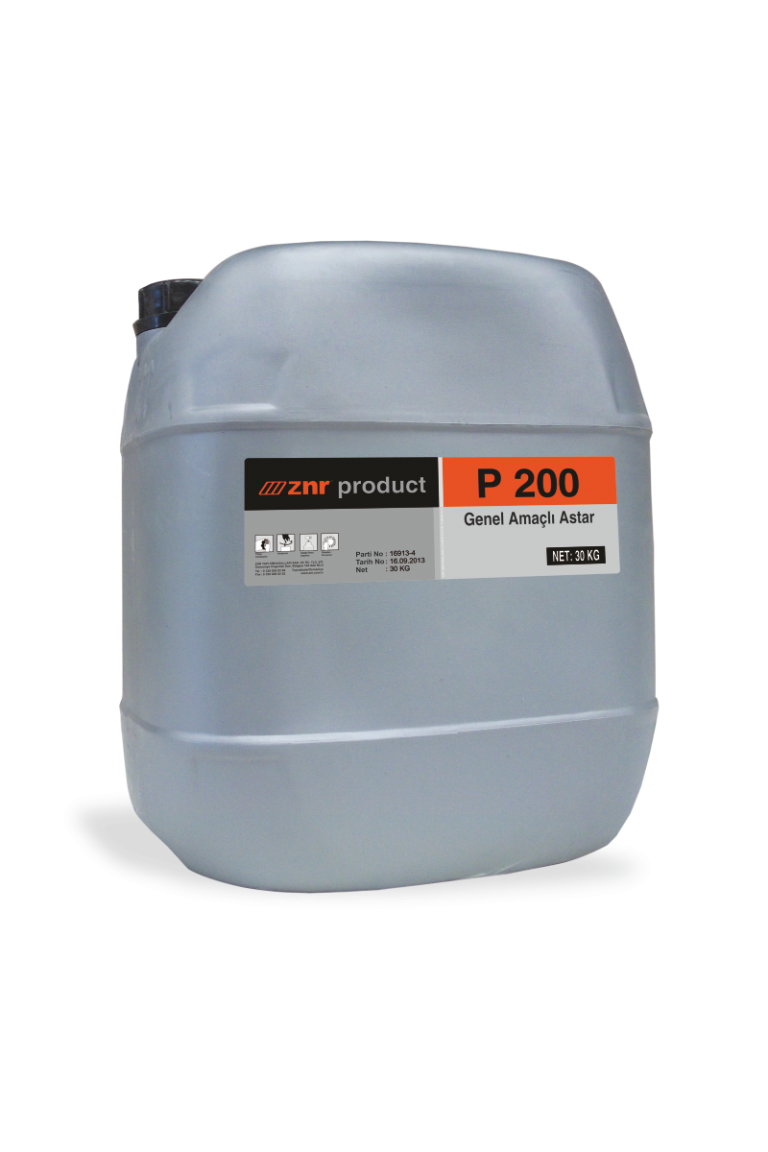
General-Purpose Acrylic Primer
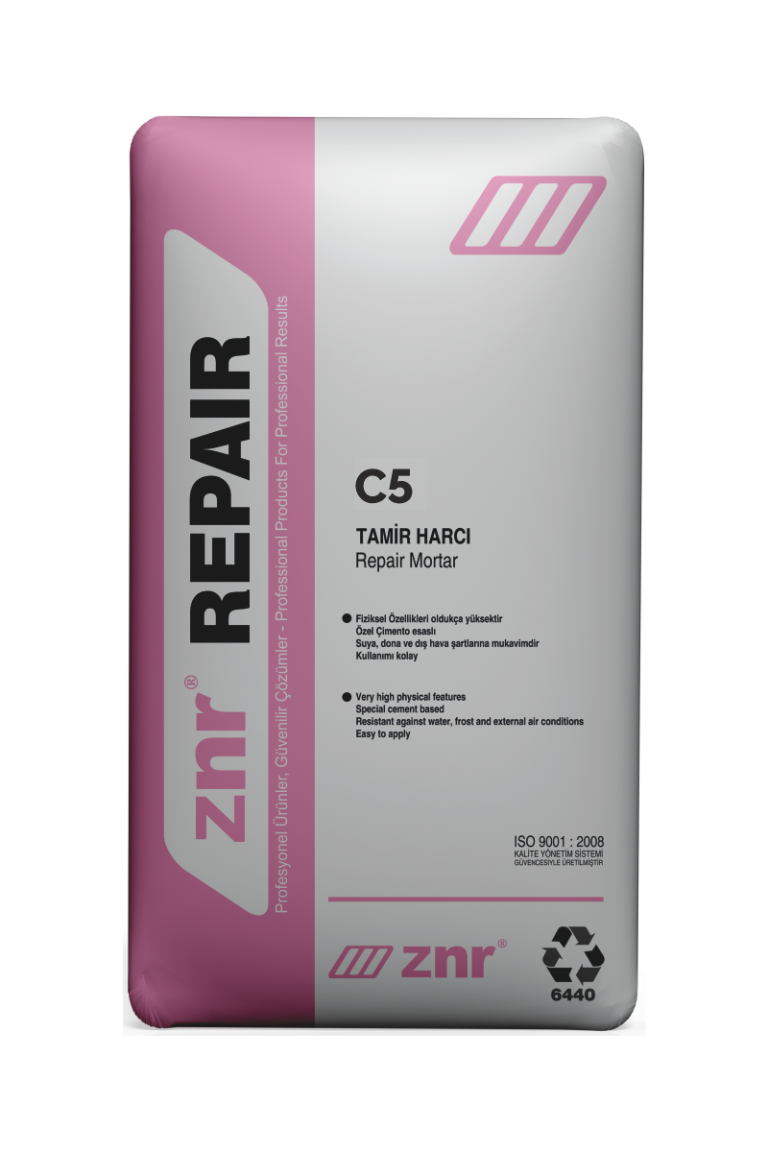
Shrinkage-Free Cement-Based Structural Fine Repair Mortar
Water-Based Polyurethane Topcoat Paint
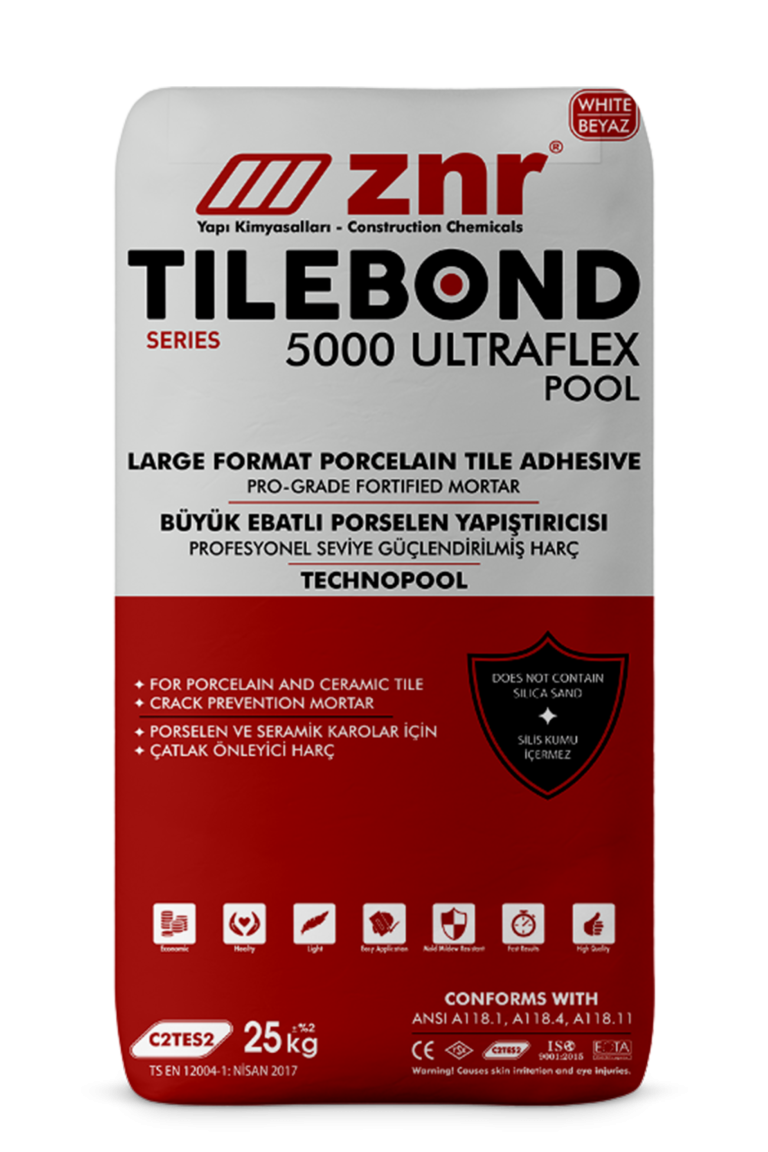
Flexible Tile Adhesive
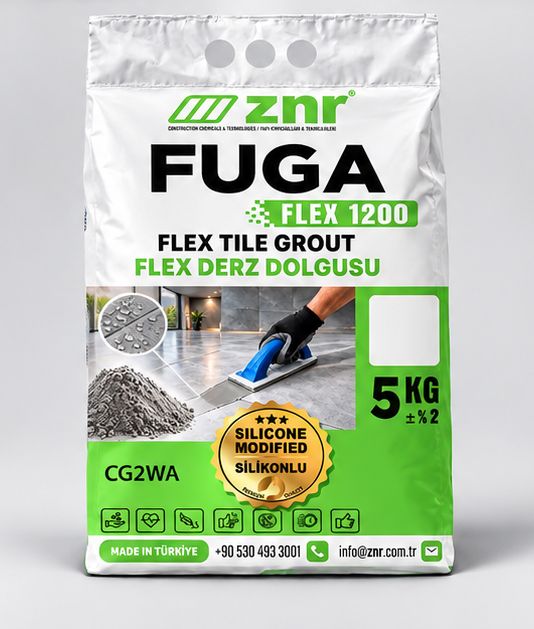
Ceramic and Wall Tile Grout
It is not. Waterproofing stops the water but does not prevent ponding. Standing water lifts the coating through freeze-thaw cycles and finds the smallest discontinuity. The fall must be at least 2%; otherwise a screed to falls is laid first.
It should not be. At a sharp 90-degree corner where the wall meets the slab the membrane is stretched and tears in time. A concave cove is formed at the corner with repair mortar and the waterproofing is carried over it.
Not directly. Polyurethane is incompatible with bitumen, and the bitumen can soften and migrate. The old membrane is removed, or a separating layer and a suitable primer are used — this situation should be put to the technical team.
Faster but wrong. A single thick coat skins over on the surface, does not cure underneath and blisters. Two coats are applied crosswise; the second closes the pinholes of the first.
Details such as the parapet return, the drain mouth and the expansion joint decide the fate of the system. Our technical team looks at it in place.